Published Research
Explore our peer-reviewed publications organized by fundamental topicsdriving our research.
How sensitive is Malbec to different terroirs?
The Catena Institute has published widely on the terroir “fingerprint” of wine.
Paper highlight: Terroir and vintage discrimination of Malbec wines based on phenolic composition across multiple sites in Mendoza, Argentina. Urvieta, R., Jones, G., Buscema, F., Bottini, R., & Fontana, A. (2021).
This study showed that Malbec wines from different regions and even individual vineyard parcels in Mendoza can be distinguished based on their chemical composition, especially their phenolic compounds. These differences remain consistent across multiple years and are influenced by factors like climate and terroir. In simple terms, the research proves that where the grapes are grown leaves a clear, measurable “fingerprint” in the wine, helping identify and differentiate wines from specific places.
How does soil Impact Terroir?
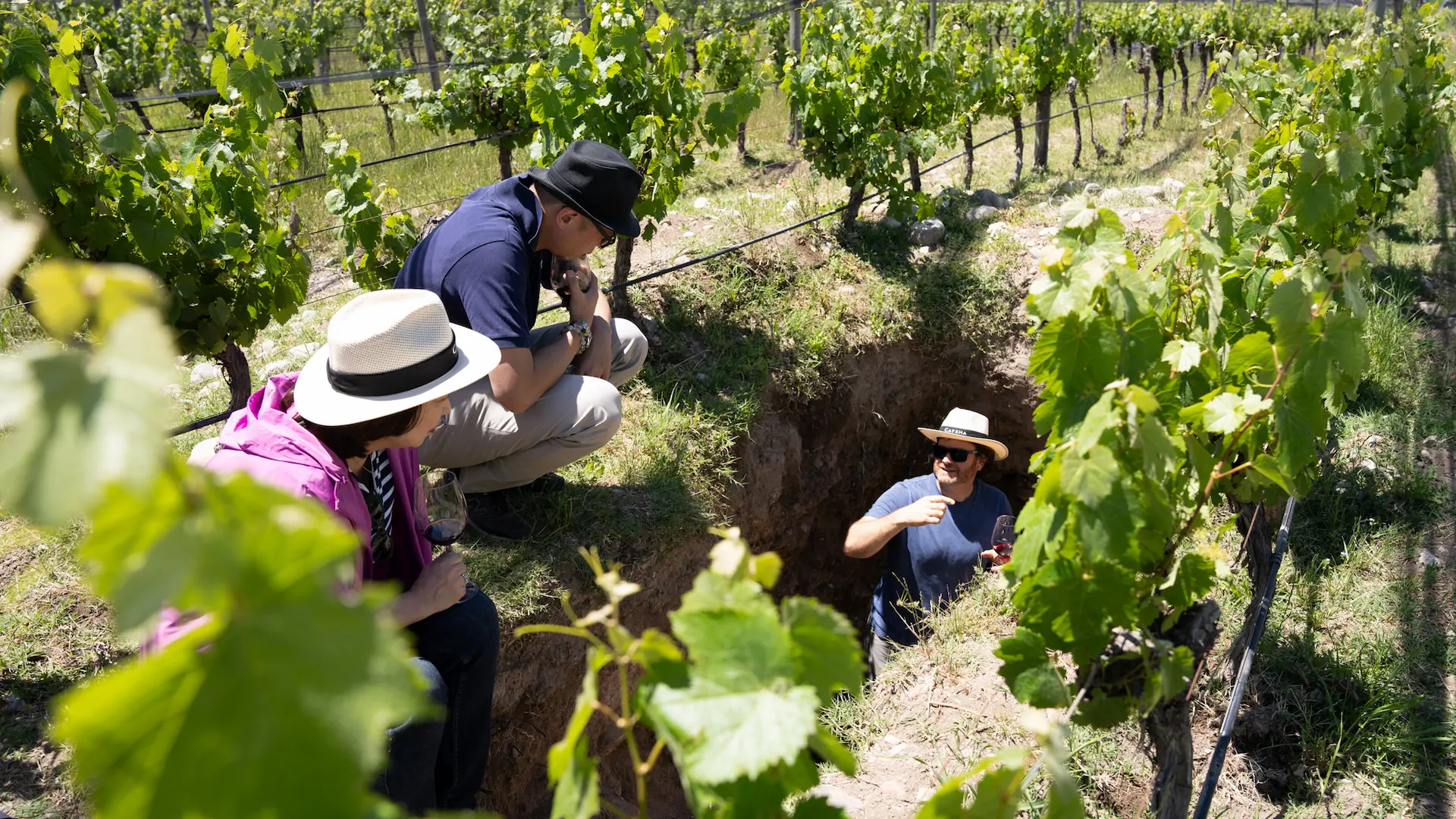
Differences in soil depth, stoniness, carbonate content, and water availability changed root distribution, vine vigor, yield, ripening dynamics, berry-skin phenolics, and wine sensory profile.
Soil properties also influenced the vineyard microbiome, especially fungal communities. Earlier collaborative work by the Catena Institute showed that root-associated bacteria can enhance drought-related responses and defense metabolism in grapevine.
Does Elevation Shape Terroir?
Malbec grown at higher altitude or under higher ambient UV-B consistently accumulated more phenolic compounds linked to wine quality and antioxidant potential, including total polyphenols, anthocyanins, resveratrol, quercetin, kaempferol, and astilbin.
Does Terroir Age?
In Malbec wines from Mendoza and California produced under standardized conditions, regional identity persists even after bottle aging. Phenolic analysis shows that wines remain distinguishable by origin after five years, while volatile analysis confirms that seven-year-old wines still retain clear regional differentiation.
What is the role of genetic diversity?
Genetic diversity in grapevine operates at multiple levels, from clonal variation to environmentally responsive regulation of gene expression (epigenetics). Muñoz et al. (2014) showed that differences in gene expression among Malbec clones translate into measurable variation in berry and wine composition. Complementarily, Marfil et al. (2019) demonstrated that environmental factors (UV-B, water deficit, ABA) modulate DNA methylation, thereby influencing polyphenol accumulation.